Home › Parking Lot Sealcoating & Maintenance
Protect your investment with routine parking lot sealcoating in Gilbert, AZ. Our crews clean the surface, seal cracks, and apply commercial grade sealer to slow oxidation and improve appearance. Regular asphalt maintenance reduces lifecycle costs and keeps your property looking sharp for customers. Request a maintenance plan and free sealcoating estimate today.
Precision Asphalt Gilbert provides professional parking lot sealcoating throughout Gilbert, AZ, Arizona and the surrounding area. Our licensed, insured crew delivers safe, clean, on-time work with a free estimate before anything begins. Call (602) 641-4473 or request your free quote.
Parking Lot Sealcoating in Gilbert, AZ That Holds Up in Real Heat
Parking lots in Gilbert take more abuse than most owners realize. UV exposure is intense for most of the year, then we get monsoon downpours and sudden temperature swings. Unprotected asphalt gets brittle, gray, and starts unraveling long before it should. Precision Asphalt Gilbert focuses on parking lot sealcoating that is matched to this climate, not a one‑size‑fits‑all product meant for mild weather.
Our sealcoating work is built around two goals: slowing down oxidation from the sun and keeping water and oil from soaking into the pavement. That means we do not simply show up and spray a thin coat and leave. We look at how your lot is used, the age and condition of the asphalt, where water sits after a storm, and where heavy vehicles track in and out. A small retail lot with light car traffic needs a different plan than a busy medical complex with delivery trucks and frequent turning movements near the entrance.
For businesses in Gilbert, timing is critical. We typically recommend major sealcoating projects in spring or fall when surface temperatures are not at their peak, so the material cures correctly and you do not lose more business hours than necessary. When summer work is unavoidable, we adjust scheduling, surface prep, and curing time to account for the extreme heat. Our crew will walk you through how long specific sections must stay closed, so you can keep your doors open while the lot is protected.
Our Step‑by‑Step Sealcoating Process
Before any material touches your pavement, we start with a detailed walkthrough of your parking lot. We map out problem areas, note faded striping, check drainage patterns, and mark all cracks and isolated failures. This inspection determines whether you simply need sealcoat and minor crack filling or whether certain sections should be patched or overlaid first.
Surface preparation is the foundation of a good sealcoat job. We mechanically blow and broom the pavement to remove loose grit and dust, cut out vegetation at the edges and in cracks, and pretreat oil spots with a petroleum‑resistant primer. If oil stains are not primed, the sealcoat will not adhere there and you will see peeling within months. In high‑traffic entries, we sometimes use a more aggressive cleaning method to remove deeply embedded dirt and rubber.
Next, we perform crack sealing. For wider or active cracks, we use hot rubberized crack sealant, which is heated and applied using specialized equipment so it bonds to the crack walls and remains flexible as the pavement moves. Smaller, non‑working cracks may be filled with a compatible cold material. Addressing cracks before sealcoating is what keeps water from reaching and weakening the base beneath your lot.
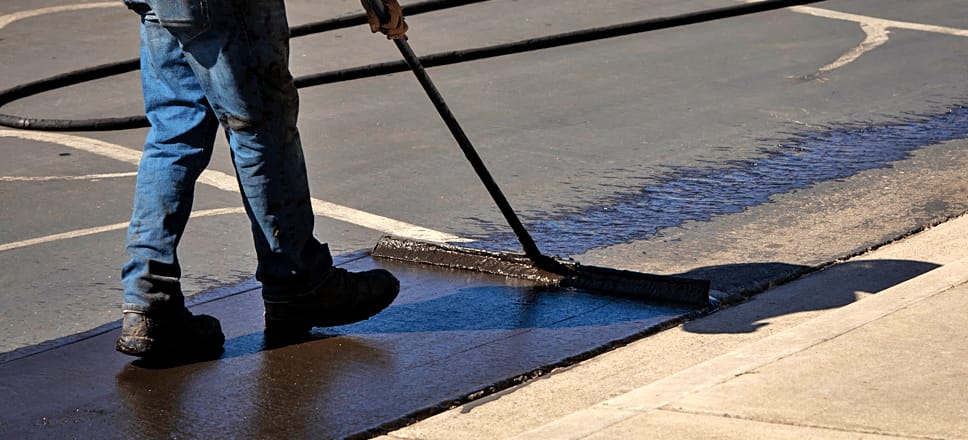
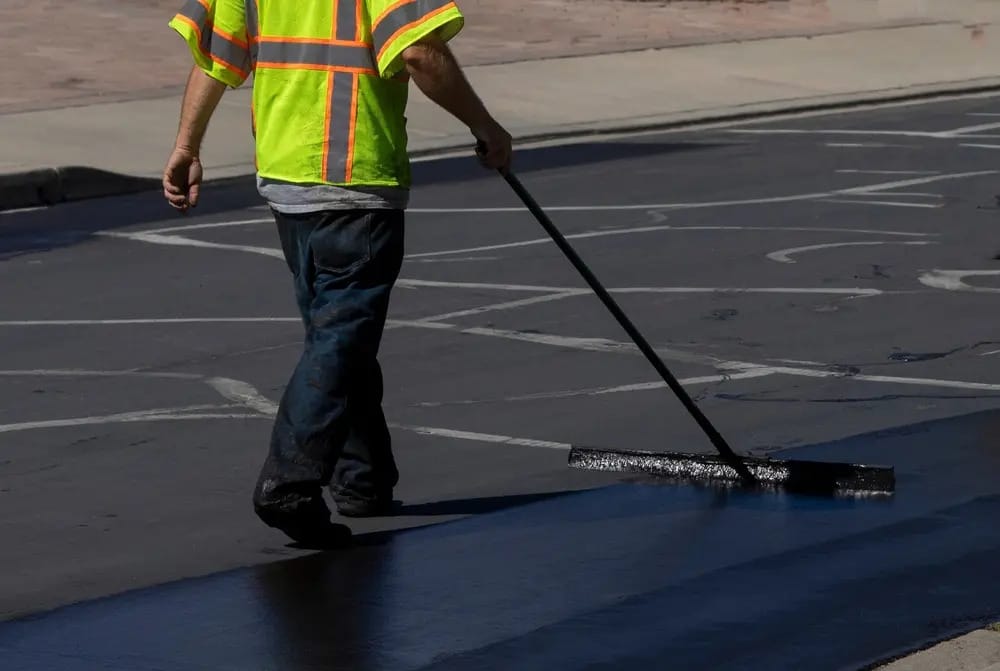
Only after the surface is sound and clean do we apply the sealcoat. Precision Asphalt Gilbert typically uses a refined coal tar or asphalt‑based sealer that complies with local and state requirements, selected according to how your lot is used and what is allowed near surrounding properties. We apply it in at least two thin coats instead of one heavy coat, which helps it cure evenly and reduces the chance of tracking or early wear. Edges are cut in by hand along curbs and concrete, then the main areas are sprayed or squeegeed for a uniform finish.
Once the sealer has cured to the right hardness, we move to restriping and layout. We reinstall all stall lines, ADA stalls, loading zones, and directional markings using traffic‑grade paint. If there have been traffic flow complaints or accidents, we can adjust the layout at this stage so your new surface is not just blacker, it works better for your customers and staff.
What Parking Lot Maintenance Really Involves
Sealcoating is only one part of keeping a Gilbert parking lot in good working order. Routine maintenance is what turns a one‑time project into extra years of life for your pavement. Precision Asphalt Gilbert builds maintenance plans that match how your lot ages, not a generic schedule.
We usually recommend a full sealcoat every 3 to 5 years in Gilbert, depending on traffic, shade, and how well drainage works on your property. High‑use entrances, drive lanes near fast food and coffee shops, and delivery routes may need attention sooner, while shaded or lightly used corners can often go longer. Between full sealcoat cycles, regular crack sealing is essential. When cracks first appear, they are usually hairline from thermal movement. If they are ignored through one or two monsoon seasons, they widen, let more water in, and begin to reflect into longitudinal and block cracking.
Maintenance also includes watching for early signs of structural issues. We look for alligator cracking, rutting in wheel paths, and settled areas where water stands after every storm. Those are not cosmetic issues. They are flags that your base may be pumping or has lost support. In our maintenance visits, we document these spots and recommend localized patching or mill and pave before the damage spreads across adjacent sections.
For property managers, we can schedule annual or semi‑annual inspections where a technician walks the site, photographs problem areas, and sends a short summary with recommended repairs and budgets. This helps you plan work before it becomes an emergency that affects tenants or customers. Small repairs handled early usually cost a fraction of what you will pay once subgrade is saturated or traffic has broken through the surface.
How Gilbert Weather and Use Patterns Affect Your Lot
Our climate is hard on asphalt. Strong UV exposure in Gilbert oxidizes the asphalt cement that binds the aggregate. Within a couple of years on an unsealed lot, surfaces can turn light gray and lose flexibility. That brittleness shows up as raveling, where fine aggregates work loose and the surface gets rough. Sealcoating slows that process by providing a sacrificial layer that takes the UV damage instead of the asphalt binder.
Monsoon storms present a different challenge. Intense bursts of water look for any opening to infiltrate. Cracks that seemed minor in May can bring water straight into the base layer by August. When that base softens, heavy vehicles create depressions and potholes. By keeping the surface sealed and cracks filled, you reduce how much water reaches the base and how much patching you will need after monsoon season.
Daily use patterns are just as important. Typical Gilbert lots see higher traffic around school drop‑offs, weekend shopping, and evening restaurant rushes. Frequent tight turns at drive‑throughs, car washes, and pickup zones can wear out the sealcoat faster in those wheel paths. That does not mean the whole lot has failed. Precision Asphalt Gilbert often recommends selective resealing of those hot spots combined with a longer cycle for the rest of the lot, which keeps costs down without sacrificing protection.
Local dust is another factor. Fine desert dust can bond to the surface and clog the pores of old sealcoat, making it look dull and preventing a new coat from bonding properly. Thorough cleaning is not just cosmetic here, it is essential to how long your next application will last. We factor these local conditions into our prep work and our recommendations on how often you should schedule sweeping or power cleaning between major projects.
Cost Factors and Options for Parking Lot Sealcoating
Business owners often ask why pricing for parking lot sealcoating can vary so widely. The square footage of the lot is only one piece of the puzzle. Precision Asphalt Gilbert looks at several cost drivers so you understand what you are paying for and where you can make smart choices.
Condition of the existing pavement is one of the biggest factors. A newer lot that only needs light crack sealing and standard prep will cost less per square foot to treat than an older lot with widespread cracking, oil‑soaked areas, and failed patches that must be repaired before sealcoat is applied. If we skip that prep, the sealcoat will fail early, so we are upfront about what is necessary and what is optional.
Layout and access also affect cost. Lots with many islands, tight corners, and small sections take more hand work and time than large open areas that can be sprayed efficiently. Working around busy businesses, medical centers, or 24‑hour operations may require night or phased work to keep traffic flowing, which can impact labor costs. We plan staging so you can keep as many spaces open as possible without compromising the finished product.
Material choice is another lever. Higher solids sealers and added sand can improve skid resistance and durability, especially in high‑traffic areas, but they require more material and sometimes extra coats. In some cases, we may suggest a different blend for drive lanes and loading zones than for standard parking stalls. During your estimate, we lay out these options with the pros, cons, and price differences so you can select the combination that fits your budget and performance needs rather than accepting a generic package.
Finally, timing can influence cost. Scheduling sealcoating during peak demand periods or at the last minute, especially right before monsoon season, can limit flexibility and available crew time. If you can plan several weeks ahead, we can often bundle your work with nearby projects in Gilbert or adjust phasing to reduce overall cost.
What to Know Before You Hire a Sealcoating Contractor
Choosing the right contractor for parking lot sealcoating is the difference between a surface that looks good for a couple of months and one that holds up for years. Before you hire, ask how the company handles prep, what materials they use, and how many coats they plan to apply. If the focus is only on speed or price per square foot, be cautious.
Precision Asphalt Gilbert encourages owners to request a clear scope in writing. That should list crack sealing quantities or at least describe how cracks will be treated, name the sealer type, and specify the number of coats and drying time. You should also know who will be on site managing traffic control and how customer access will be handled during each phase.
In Gilbert, it is important to confirm that your contractor is familiar with local temperatures and curing times. Sealcoat applied in extreme heat or right before a storm, without adjustment, can track, peel, or cure unevenly. Ask how they schedule around monsoon forecasts and what they do if weather changes mid‑project. We monitor local conditions closely and will reschedule or adjust techniques rather than risk a failed application.
You should also ask about warranty terms and what is actually covered. A realistic warranty will address premature peeling or adhesion failures, but no one can guarantee against structural issues caused by an already‑failed base or unexpected utility work under your lot. We walk through those limits before work begins so expectations match what the pavement can realistically deliver. When you understand these factors, you can compare bids fairly and choose a contractor based on value, not just the lowest line item.