Home › Speed Bumps, Curbs, and Asphalt Accessories
Control traffic and protect your property with professional speed bump installation in Gilbert, AZ. We install asphalt speed humps, rolled and vertical curbs, and other asphalt accessories to manage flow and define spaces. Properly built features last longer and are easier to maintain. Request a site review and tailored traffic calming plan today.
Precision Asphalt Gilbert provides professional speed bump installation throughout Gilbert, AZ, Arizona and the surrounding area. Our licensed, insured crew delivers safe, clean, on-time work with a free estimate before anything begins. Call (602) 641-4473 or request your free quote.
Practical Traffic Control Solutions for Gilbert Properties
At Precision Asphalt Gilbert, speed bump installation, curb work, and asphalt accessories are not add-ons. For many Gilbert properties, they are the pieces that make parking lots and private drives work safely every day. We help HOAs, schools, churches, medical offices, retail centers, and private communities choose the right combination of speed bumps, curbing, and markings so traffic slows where it should and drainage still works during Arizona monsoon storms.
Our team starts with how your site is actually used. We listen to where near misses happen, where cars cut through, and where people walk at night. Then we look at drainage patterns, existing pavement thickness, and how the Arizona sun has aged the asphalt. From there we recommend specific solutions, such as thermoplastic speed bumps for busy drive aisles, 6 inch vertical curbs to protect landscaping, or wheel stops to keep vehicles off sidewalks.
Because everything is built on asphalt or concrete, we also evaluate the base underneath. A speed bump anchored into brittle or alligatored asphalt will start to loosen. Curbs poured on poorly compacted edges will separate and crack. Precision Asphalt Gilbert addresses those issues up front so you are not paying to redo work in a year or two.
How Professional Speed Bump Installation Works
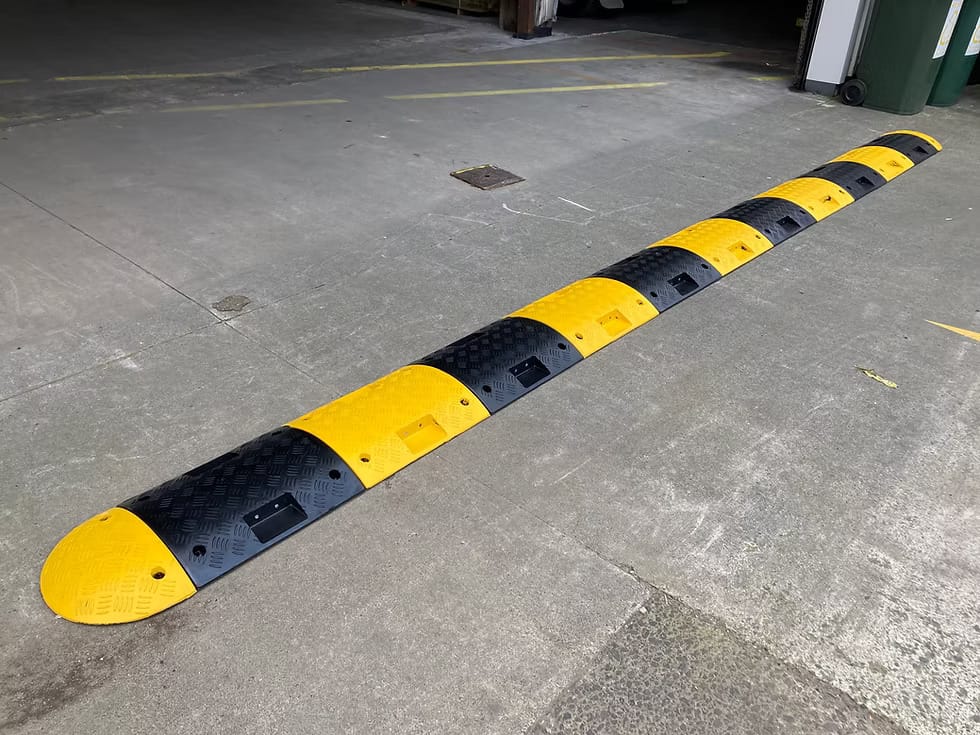
Correct speed bump installation is more than bolting yellow plastic strips to the pavement. We match the bump design to your goal, which is usually 5 to 10 mph in parking lots and 15 mph in longer private drives. Too aggressive and you get complaints and damage claims. Too mild and drivers ignore them.
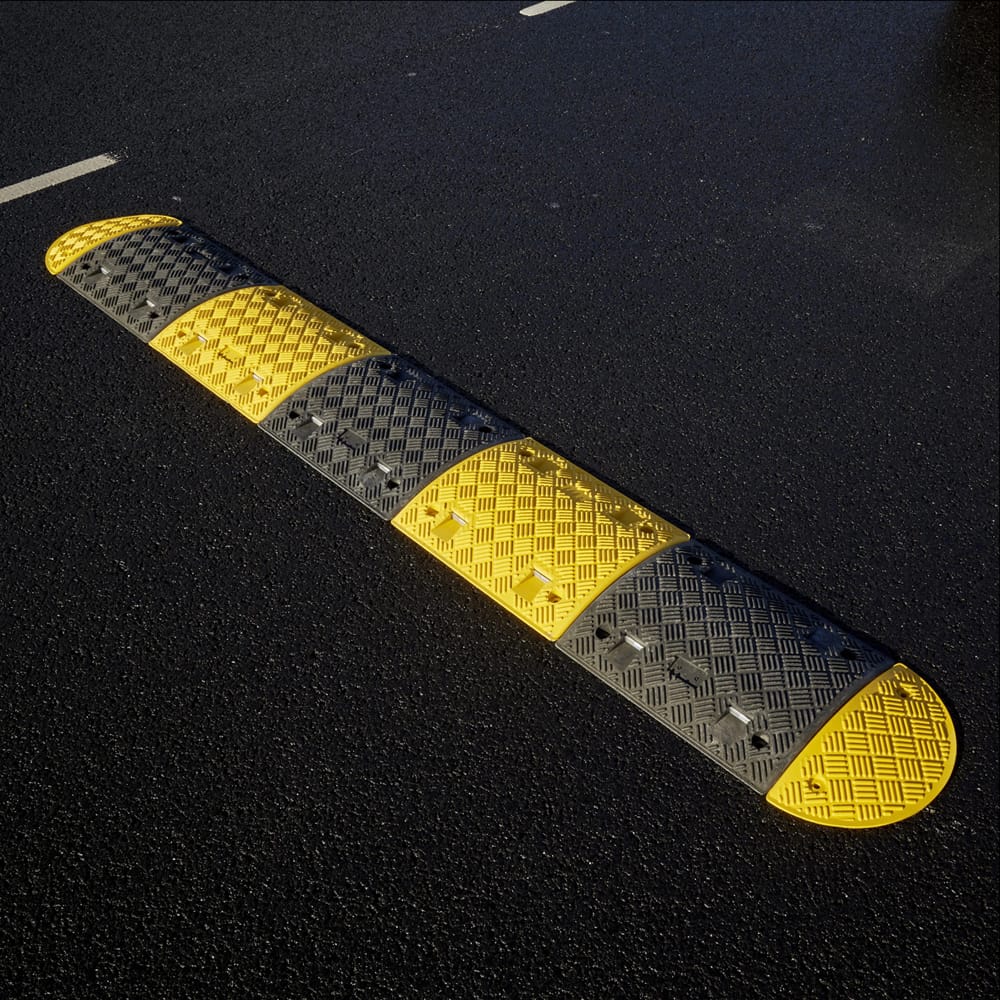
First, we measure the lane width and turning patterns so the bump does not interfere with fire lanes or tight delivery routes. We confirm ADA access routes and do not place bumps where wheelchairs, walkers, or gurneys frequently cross. Then we select the right profile. For Gilbert parking lots, we often use preformed recycled rubber or composite bumps in 6 to 7 foot sections with a gentle, rounded slope. For private drives or long internal roads, we may recommend asphalt speed humps that are wider and less abrupt.
Installation begins with layout using chalk and string lines so the bump is square to the drive and the transitions are smooth. For bolt down systems, we core drill through the existing asphalt and use epoxy set rebar or heavy duty concrete anchors in predrilled holes. The bump sections are then aligned, tightened to manufacturer spec, and backfilled at the edges with asphalt patch to remove trip points.
For built in asphalt speed humps, we saw cut the outline, grind or mill the surface where needed, apply a tack coat, and place a new asphalt lift shaped to the desired height and width, commonly 3 inches high over 12 to 14 feet. We compact with a roller and plate compactor so there are no hollow spots that will crack. Once cured, we stripe the hump with reflective traffic paint or thermoplastic chevrons so it is visible at night.
We schedule this work around Gilbert weather. In summer, we plan early morning work so the asphalt can be compacted before surface temps go extreme. In cooler months, we watch overnight lows to make sure the material cures properly and striping bonds instead of peeling.
Curbs, Wheel Stops, and Edge Control
Curbs and other edge controls are what keep your asphalt surfaces looking neat and functioning correctly during heavy rain. Precision Asphalt Gilbert designs and installs several types of curbing that fit the way your property is used.
Concrete vertical curbs (often 6 inch) are common along parking lot perimeters and drive aisles. We form and pour these over a compacted base, typically 4 to 6 inches of aggregate, then place a 3,000 to 3,500 psi concrete mix. Control joints are tooled or saw cut at regular intervals to manage cracking, and we pay special attention where curbs meet ADA ramps and drive entrances so there are no sharp edges.
For landscaped islands, we can pour monolithic curb and gutter that guides water toward inlets, which is important in Gilbert when sudden monsoon downpours hit. On residential HOA roads, we may recommend roll curbs that are easier for driveways and RV access, or extruded curbing installed with a curb machine along existing asphalt. Extruded curbs require clean, sound pavement, so we grind and clean edges before placement to avoid early separation.
Wheel stops (parking blocks) are another option where full curbs are not practical. We set precast concrete or recycled rubber stops using rebar pins drilled into the asphalt below so they do not shift. Placement is measured from the curb or sidewalk edge to keep vehicles from overhanging walkways while still allowing doors to open conveniently.
In every case, we think about how curbs interact with your speed bump installation. Bumps placed too close to curbed islands can trap water. Poorly aligned wheel stops can create trip hazards near humps. We coordinate all these accessories so they work as one system, not as isolated pieces.
Asphalt Accessories: Signage, Markings, and Safety Details
Speed bumps and curbs only work well when drivers can see and understand them in time to react. That is where asphalt accessories, like signage and striping, make a big difference for safety and liability.
Precision Asphalt Gilbert installs MUTCD compliant speed limit and warning signs alongside new speed bump installations. We determine mounting heights, setback from pavement, and post foundation depth based on local conditions and city guidelines. In many Gilbert communities, that means using breakaway posts set in concrete footings that are sized for our caliche soils.
On the pavement itself, we use high contrast traffic paints and, when budgets allow, thermoplastic markings that hold up better under Arizona UV. Speed bump profiles are outlined with diagonal chevrons, and arrows and word legends guide drivers where patterns might be confusing, such as around schools or medical complexes. At pedestrian crossings near bumps, we can add enhanced zebra striping or stop bars to visually tighten the driving lane and reinforce slow speeds.
Other accessories, like reflective markers, bollards around light poles, and protective sleeves around sign posts, are often worth the small additional cost. They reduce night time incidents and help your lot read clearly even for first time visitors. For properties with heavy cart traffic, such as grocery or big box retail, we may also recommend cart corrals, anchored into the asphalt, positioned relative to speed bumps so carts cannot roll into drive lanes unchecked.
All these details are discussed during planning, with clear pricing by item. That way you can prioritize which accessories to install immediately and which can be phased in later without redoing work.
Costs, Timing, and What Affects Your Investment
The cost of speed bump installation, curbs, and asphalt accessories in Gilbert varies based on a handful of predictable factors. We explain these up front so you can make informed decisions and avoid surprises.
For speed bumps and humps, pricing is driven by type (bolt down rubber or composite versus built in asphalt), length, and quantity. Preformed sections have a clear per foot cost plus hardware, while asphalt humps include saw cutting, material, and compaction time. Markings, such as chevrons and warning text, are usually priced per bump.
Curbs are typically priced per linear foot, with differences depending on whether they are extruded onto existing asphalt or poured in forms with rebar. Complex shapes, such as tight landscaped islands or integrated curb and gutter, cost more per foot than straight runs. Accessory items, like wheel stops, signs, and bollards, are usually line items so you can see their specific contribution to the total.
Site condition is a major cost driver. If your existing asphalt is severely cracked, rutted, or ponding water, we may need to repair or reinforce those sections before installing bumps or curbs. Anchoring into weak pavement leads to failures, and we avoid short term fixes that cost you more long term. Drainage issues, especially around low points that collect water during monsoons, may require added grading or additional inlets near curb work.
Timing and phasing also matter. For active commercial sites, Precision Asphalt Gilbert can schedule work during off hours, such as early mornings or weekends, and phase installations so portions of the lot remain open. This sometimes adds traffic control costs, like cones, signage, and flaggers, but helps you avoid lost business. We provide written schedules and staging plans so your tenants or residents know what to expect.
Before you approve anything, you receive a detailed, written proposal that breaks down labor, materials, and accessories. We review this with you, explaining any options that could raise or lower the price, such as choosing paint versus thermoplastic or rubber bumps versus built in asphalt humps.
Planning Your Project With Precision Asphalt Gilbert
Good results begin with a clear plan that respects how your property operates. Our process is straightforward and built around communication.
First, we meet on site and walk the property with you. We note where you want speed reduction, where pedestrians travel, how emergency vehicles enter, and where drainage already struggles. If your HOA or board has specific concerns, such as noise from aggressive bumps, we factor that into design and material selection.
Next, we prepare a layout plan that shows proposed speed bump locations, types, and spacing, as well as new or modified curbs, wheel stops, and any additional accessories. For many Gilbert properties, that includes recommended speed limits and sign placement that fit how your roads tie into city streets. We can coordinate with any existing engineering reports or city comments if your project is part of a larger improvement.
Once you approve the plan and proposal, we schedule work, taking into account school calendars, retail peak hours, and seasonal weather. Before we start, we provide notices you can share with residents or tenants, explaining temporary traffic changes, cure times, and when paint or thermoplastic markings will be applied.
During construction, a field lead from Precision Asphalt Gilbert remains on site or on call, so you have a direct contact for any concerns. We keep the work zone clean, maintain access to ADA stalls and main entrances wherever possible, and secure open areas at the end of each day. When the work is complete, we walk the site with you, confirm that bumps and curbs are performing as intended, and review any maintenance tips.
If you are considering speed bump installation or new curbing anywhere in Gilbert or nearby East Valley communities, we are happy to start with a practical walk through. You will leave that visit with clear options, ballpark pricing, and a realistic schedule so you can decide what fits your property and budget.